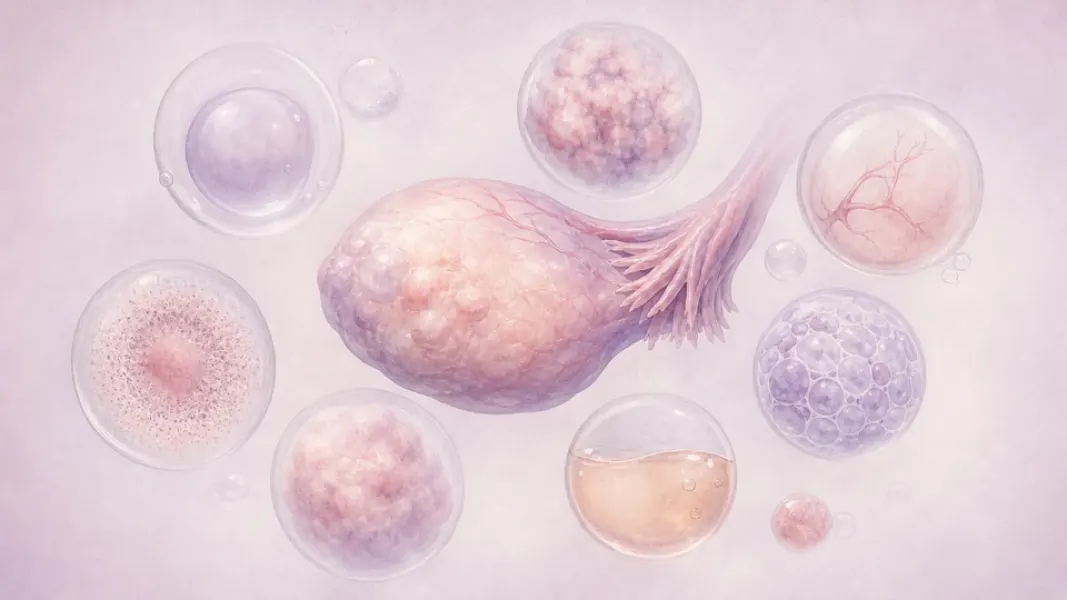


Why is there no single answer to pelvic pain?
Besides the uterus, ovaries and tubes, the lower abdomen contains the bladder, ureters, small and large bowel, appendix, muscles, bones and hernia openings, and pain from these organs can feel very similar. So the doctor's first questions are usually: where is the pain, when and how did it start; is it constant or cramping; is it related to the menstrual cycle; when was your last period; and is there fever, vomiting, urinary or bowel symptoms, abnormal discharge or bleeding?
Gynaecological causes
Period pain (dysmenorrhoea)
Cramping pain that starts just before or with the period and may spread to the groin, lower back and legs. Primary dysmenorrhoea usually begins in adolescence with no underlying disease. Period pain that starts later in life or gets progressively worse may be due to a cause such as endometriosis, adenomyosis or fibroids (secondary dysmenorrhoea).
Endometriosis
Tissue similar to the lining of the womb grows outside the uterus. Increasingly painful periods, deep pain during intercourse, painful bowel movements or urination during periods and chronic pelvic pain are typical. It can also make it harder to conceive.
Ovarian cysts and ovarian torsion
Most functional cysts cause no symptoms and resolve on their own. A cyst that ruptures or bleeds can cause sudden one-sided pain. Twisting of the ovary (torsion) causes sudden, severe, usually one-sided pain with nausea and vomiting; because the ovary's blood supply is compromised, urgent surgical assessment is needed.
Ectopic pregnancy
A pregnancy that implants outside the uterus, usually in a tube. One-sided pelvic pain with vaginal bleeding after a missed period or a positive pregnancy test is a warning sign. If the tube ruptures there may be sudden, severe abdominal pain, shoulder pain, weakness, dizziness or fainting; this may indicate life-threatening internal bleeding and needs emergency care. For this reason a pregnancy test is part of assessing pelvic pain in any woman of reproductive age.
Pelvic inflammatory disease (PID)
An infection of the uterus, tubes and ovaries, usually caused by sexually transmitted bacteria. There may be pain on both sides of the lower abdomen, fever, abnormal or foul-smelling discharge, pain during intercourse and bleeding between periods. Without timely treatment it can damage the tubes and increase the risk of infertility and ectopic pregnancy.
Fibroids
Benign muscle tumours of the uterus. Most cause no pain; large fibroids can cause pelvic fullness, pressure, frequent urination and heavy periods. Degeneration of a fibroid (loss of its blood supply), especially in pregnancy, can cause sudden localised pain.
Ovulation pain
Mild to moderate one-sided pain in mid-cycle at ovulation, lasting a few hours to a day or two. It may switch sides from month to month and is usually harmless. Severe or prolonged pain, or pain with fever and vomiting, should raise the possibility of another cause.
In pregnancy, groin pain from stretching of the ligaments that support the uterus is common, but bleeding, regular contractions or severe pain should be assessed for threatened miscarriage or preterm labour.
Non-gynaecological causes
- Appendicitis: pain often starts around the navel and settles in the lower right abdomen within hours, with loss of appetite, nausea and fever. It can be confused with pain from the right ovary, so careful assessment is needed.
- Urinary tract infection: central lower abdominal pain or pressure with burning on passing urine, frequency and urgency; fever and flank pain suggest the infection has reached the kidney.
- Kidney and ureteric stones: severe pain that comes in waves, starting in the flank and spreading to the groin; there may be blood in the urine, nausea and vomiting.
- Bowel causes: constipation, wind, irritable bowel syndrome, inflammatory bowel disease and, especially in older women, diverticulitis can cause lower abdominal pain. A change in bowel habit and blood in the stool are important clues.
- Musculoskeletal causes: strain of the abdominal or groin muscles and problems with the hip joint or pubic bone (symphysis) cause pain that worsens with movement and eases with rest.
- Hernia: a groin swelling and pain that becomes more obvious with coughing or straining and may disappear on lying down. If the swelling becomes hard, will not go back and is accompanied by severe pain and vomiting, the hernia may be trapped (strangulated) and needs emergency assessment.
When to seek emergency care
- Sudden, severe or steadily worsening abdominal or pelvic pain
- Pelvic pain or bleeding with a possible pregnancy or a positive pregnancy test
- Shoulder pain, dizziness, fainting or feeling faint
- High fever or shivering
- Persistent vomiting, a rigid abdomen or pain that worsens when touched
- Heavy vaginal bleeding
- A hard, painful groin swelling that will not go back
How is the diagnosis made?
Assessment starts with a detailed history and physical examination, with a gynaecological examination when needed. In women of reproductive age, a pregnancy test is one of the first steps. A full blood count, inflammatory markers such as CRP, urinalysis and, when needed, swabs for infection are requested. Transvaginal ultrasound is the main imaging method for the uterus and ovaries; in some cases abdominal ultrasound, CT or MRI is needed. When the diagnosis remains unclear or a condition such as endometriosis is suspected, laparoscopy can be used for both diagnosis and treatment.
Pelvic pain lasting more than six months is called chronic pelvic pain. Rather than focusing on a single cause, gynaecological, bowel, urinary, musculoskeletal and nerve-related causes are assessed together, and treatment often involves more than one area.
What can I do at home?
For known period pain, painkillers recommended by your doctor, heat and regular exercise may help. For new, unexplained or unusual pain, it is better to be assessed than to mask the picture with painkillers.
Frequently Asked Questions
Can pelvic pain be a sign of pregnancy?
Is pain in the lower right abdomen appendicitis?
How long does ovulation pain last?
Do ovarian cysts cause pain?
Is it harmful to take painkillers for period pain?
When should I go to the emergency department with pelvic pain?
Sources
The information on this website is for general information only and does not replace a medical consultation.