

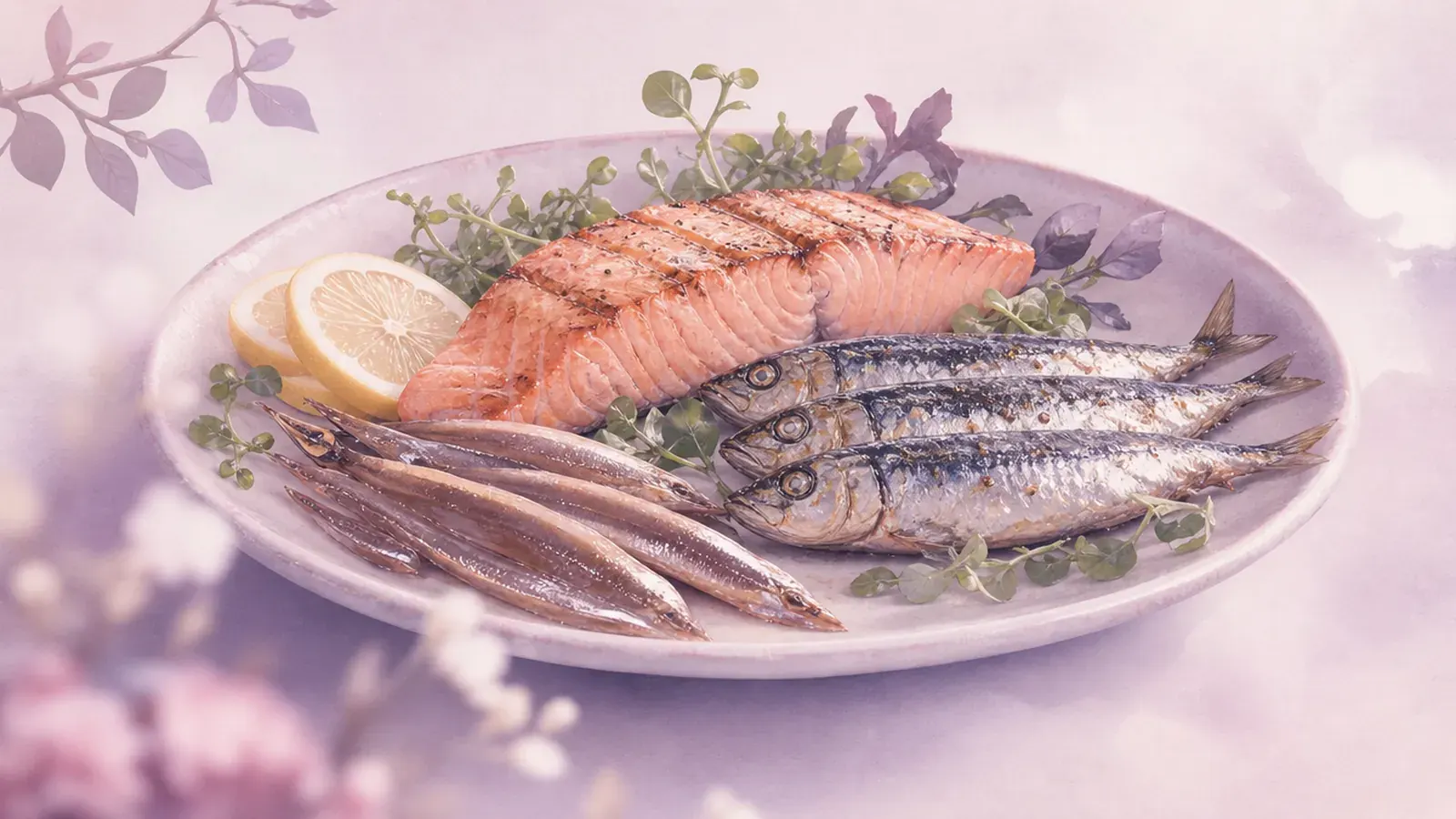
Why is fish important in pregnancy?
Fish provides high-quality protein, omega-3 fatty acids (especially DHA and EPA), iodine, vitamin D, selenium, iron and vitamin B12. DHA plays a structural role in the development of the baby's brain and eyes (retina) and accumulates in the baby's tissues especially in the last trimester and during breastfeeding. Research links eating the recommended amounts of low-mercury fish in pregnancy with favourable outcomes for the child's development. So the aim in pregnancy is not to avoid fish but to choose the right kinds in the right amounts.
Why does mercury matter?
Mercury that enters water is converted by microorganisms into methylmercury, which builds up along the food chain. So levels are higher in large, long-lived predatory fish that eat other fish. Methylmercury crosses the placenta and can harm the developing nervous system. Small, short-lived fish that feed on plankton or small organisms usually have low mercury levels.
How much fish should I eat?
The joint advice of the US Food and Drug Administration (FDA) and Environmental Protection Agency (EPA) for pregnant and breastfeeding women is:
- 2-3 servings a week from the “Best Choices” (low-mercury) group: one serving is about 113 g (4 ounces), roughly the size and thickness of the palm of your hand, giving about 225-340 g a week in total.
- Only 1 serving a week from the “Good Choices” group: in a week you eat one of these fish, no other fish is advised.
- High-mercury fish: should not be eaten at all.
The UK National Health Service (NHS) additionally advises limiting oily fish such as salmon, trout, mackerel, sardines and herring to no more than 2 portions a week in pregnancy because of environmental pollutants. Choosing some weekly portions from oily fish and some from white fish is a practical way to meet both recommendations, and rotating different kinds reduces the pollutant load from any single source.
Which group do fish commonly eaten in Türkiye belong to?
The classification below is based on the species in the FDA/EPA list and their local equivalents. Some local species are not on that list, so they have been assessed cautiously by considering the fish's size, diet and related species on the list; these assessments are estimates.
Low-mercury fish to choose (2-3 servings a week)
- Anchovy (hamsi)
- Sardine
- Atlantic mackerel (uskumru)
- Salmon
- Trout (listed by the FDA as freshwater trout; the sea-farmed fish sold in Türkiye as “Turkish salmon” is the same species, rainbow trout)
- Whiting, grey mullet, sole, plaice
- Cod, hake, herring
- Shrimp, squid, oysters and scallops (provided they are thoroughly cooked)
- Canned light tuna, skipjack
“Good Choices” (no more than 1 serving a week)
- Bluefish (lüfer; in this group on the FDA list; smaller fish may be preferred as larger ones can accumulate more mercury)
- Albacore (white) and yellowfin tuna, canned or fresh
- Grouper, monkfish, mahi mahi, carp
Fish to avoid
- Swordfish
- Shark species
- King mackerel, marlin, orange roughy
- Bigeye tuna
Local species not on the list
- Gilthead sea bream (çipura) and European sea bass (levrek): most of those eaten in Türkiye are farmed to portion size. Because of their small size and short lives, mercury levels are expected to be low, and a related species, black sea bass, is in the FDA low-mercury group. They can be included in the 2-3 weekly servings.
- Horse mackerel (istavrit) and Atlantic chub mackerel (kolyoz): small, short-lived schooling fish; kolyoz's close relative, Pacific chub mackerel, is in the FDA low-mercury group. They can be regarded as low-mercury.
- Red mullet (barbunya, tekir) and turbot (kalkan): not on the list. Red mullets are small bottom-dwelling fish; turbot is a flatfish like sole and plaice. They can be eaten within the weekly servings, preferring portion-sized fish.
- Atlantic bonito (palamut, torik): predatory relatives of tuna, and mercury can build up as they grow. As they are not on the list, a cautious approach is to treat them like “Good Choices”, limit them to 1 serving a week and prefer smaller palamut to larger torik.
- Bluefin tuna (orkinos): a very large, long-lived predator. Although not listed separately, large tuna species can be high in mercury, so avoiding it in pregnancy is the cautious choice.
- Mussels: mercury in shellfish is generally low; the main risk is food safety. Eat only thoroughly cooked mussels from sources where the cold chain is assured, and avoid stuffed or fried mussels prepared and stored under unknown conditions.
- Lake and river fish, recreational catch: there may be local advisories for these waters. When no advice is available, the FDA recommends eating only 1 serving a week of such fish and no other fish that week.
Raw, marinated and smoked fish: listeria and parasites
Because of changes in the immune system, infection with Listeria bacteria (listeriosis) develops more easily in pregnancy and can cause miscarriage, stillbirth, preterm birth or serious infection in the newborn. Raw fish can also carry parasites and other bacteria. So in pregnancy avoid:
- Sushi and sashimi made with raw fish (sushi made with cooked fish or vegetables is fine)
- Raw oysters, mussels and other raw shellfish
- Cold-smoked salmon and other cold-smoked fish, unless cooked until steaming hot
- Fish that is salted or dried without cooking, such as lakerda or çiroz
- Fish “cooked” in lemon juice or vinegar, and ceviche; acid does not reliably kill bacteria and parasites
Smoked fish thoroughly heated in cooked dishes and shelf-stable canned fish can be eaten.
Preparing fish safely
- Cook fish until the internal temperature reaches 63°C and the flesh is opaque and flakes easily with a fork.
- Steaming, baking, grilling and poaching are good options; limit deep-frying and charred parts.
- Buy fish from reliable sellers who keep the cold chain; use a separate chopping board for raw fish and wash your hands.
- Store cooked leftovers in the fridge, eat them within 1-2 days and reheat until steaming hot.
Canned tuna
The mercury content of canned tuna depends on the species. Light and skipjack tuna are in the low-mercury group; albacore (white) and yellowfin tuna are “Good Choices” and should be limited to 1 serving a week. Check whether the label states the species; if it does not, be cautious and keep the weekly amount low. The salt content of canned fish is also worth watching.
Do I need an omega-3 supplement?
Most women who eat 2-3 servings of fish a week do not need an additional omega-3 supplement. For women who do not eat fish, have a fish allergy or follow a vegetarian diet, a DHA supplement can be discussed with the doctor; international recommendations aim for at least 200 mg of DHA a day in pregnancy and breastfeeding. Fish liver oils can contain large amounts of vitamin A and should not be used in pregnancy without medical advice. When choosing a supplement, prefer products tested for purity from mercury and other pollutants. Walnuts, flaxseed and chia seeds contain plant omega-3 (ALA), but its conversion to DHA in the body is limited.
During breastfeeding
The same advice applies while breastfeeding: 2-3 servings a week of low-mercury fish, avoiding high-mercury fish and cooking fish well support the amount of DHA passed to the baby through breast milk.
Frequently Asked Questions
Can I eat anchovies in pregnancy?
Is salmon safe in pregnancy?
Can I eat canned tuna?
Can I eat sushi in pregnancy?
How much bonito and bluefish can I eat in season?
Should I take a fish oil supplement?
Sources
The information on this website is for general information only and does not replace a medical consultation.