

What is an ectopic pregnancy?
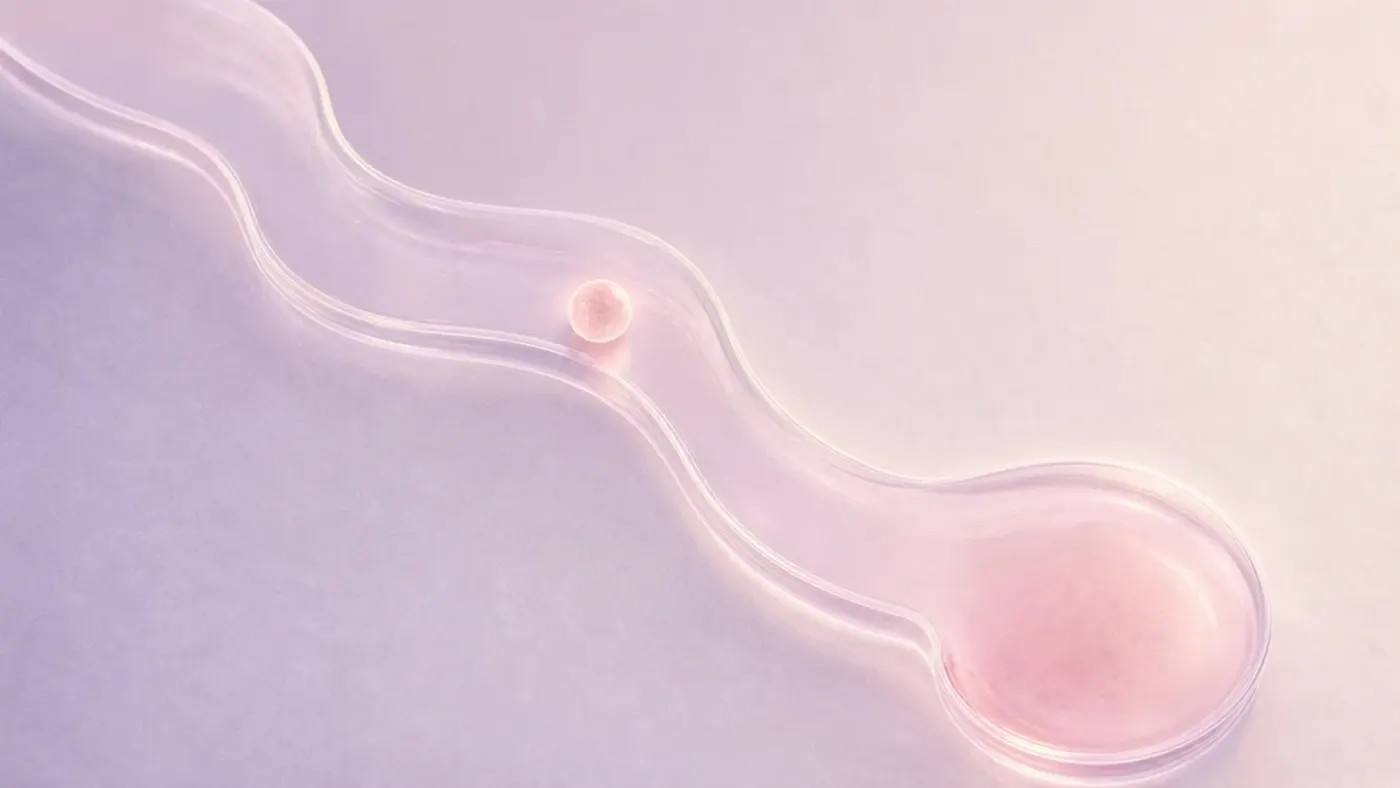
In a normal pregnancy, fertilisation takes place in the fallopian tube; over a few days the fertilised egg travels along the tube to the uterine cavity and implants in the inner lining of the uterus (the endometrium). In an ectopic pregnancy, the pregnancy implants somewhere outside the uterine cavity. In the great majority of cases this is the fallopian tube, which is why it is also called a "tubal pregnancy".
The fallopian tube and the other sites outside the uterus cannot support a growing pregnancy, so an ectopic pregnancy cannot develop into a healthy baby. If it keeps growing, the tube can rupture and cause serious bleeding into the abdomen. Early diagnosis matters both to prevent this emergency and to allow less invasive treatment options.
Where can an ectopic pregnancy implant?
- Fallopian tube (tubal pregnancy): the most common site.
- The part of the tube that runs through the uterine wall (interstitial or cornual pregnancy): it may progress to a later stage without symptoms, and bleeding can be heavy if it ruptures.
- Ovary (ovarian pregnancy)
- Cervix (cervical pregnancy)
- A previous caesarean scar (caesarean scar pregnancy): recognised more often as caesarean births have increased.
- Abdominal cavity (abdominal pregnancy): very rare.
Sites other than the tube are uncommon, and each needs its own specific assessment and treatment. Very rarely, there is a pregnancy inside the uterus and another outside it at the same time (heterotopic pregnancy). This is exceptionally rare in natural conceptions but somewhat more common after assisted reproduction such as IVF.
How common is it?
Ectopic pregnancy occurs in about 1-2% of all pregnancies. Today, thanks to early attendance, transvaginal ultrasound and blood tests, most ectopic pregnancies can be diagnosed before the tube ruptures.
Who is at higher risk?
The underlying cause is that the fertilised egg's journey along the tube is slowed or blocked. Conditions that damage the lining or movement of the tube increase the risk:
- A previous ectopic pregnancy: one of the most important risk factors.
- Previous tubal surgery and tubal damage: if a pregnancy occurs after tubal surgery, including sterilisation (tubal ligation), it is more likely to be ectopic.
- Pelvic inflammatory disease (PID) and sexually transmitted infections: chlamydia in particular can scar the tubes.
- Smoking: it affects tubal movement and increases the risk.
- Infertility and assisted reproduction such as IVF
- Becoming pregnant with an intrauterine device (coil) in place: a coil greatly reduces the overall chance of pregnancy. However, if a pregnancy does occur with a coil in place, it is more likely to be ectopic, so an ectopic pregnancy must always be excluded.
- Older maternal age
Even so, about half of women diagnosed with an ectopic pregnancy have no known risk factor. Having no risk factors does not rule out an ectopic pregnancy.
Symptoms
An ectopic pregnancy may cause no symptoms in the first weeks. The pregnancy test is positive, and the usual signs of pregnancy, such as a missed period, breast tenderness and nausea, may be present. Symptoms usually appear between the 4th and 12th weeks of pregnancy:
- Vaginal spotting or bleeding, which may differ from a period and look brown and watery
- Pain low in the abdomen, often on one side; it may be mild or severe, constant or intermittent
- Shoulder-tip pain (which can be caused by internal bleeding irritating the diaphragm)
- Dizziness, weakness or feeling faint
- Pain when opening the bowels, pressure in the back passage or diarrhoea
These symptoms can be confused with threatened miscarriage, a urinary tract infection or bowel problems; if they occur when you might be pregnant, you need to be assessed.
Rupture of the tube: an emergency
As an ectopic pregnancy grows, the tube can rupture and bleed into the abdomen. Sudden, severe abdominal pain, shoulder-tip pain, fainting, marked paleness, a racing pulse or feeling very unwell may be signs of internal bleeding. In this case, call 112 (or your local emergency number) or go to the nearest emergency department without delay.
Diagnosis
The diagnosis is made by combining your symptoms, a pelvic examination, transvaginal ultrasound and a blood test for the pregnancy hormone (beta-hCG). A single test is often not enough, and tests may need to be repeated a few days apart.
Transvaginal ultrasound
An internal (vaginal) ultrasound scan is the key test in early pregnancy. Seeing a pregnancy sac inside the uterus largely rules out an ectopic pregnancy, apart from the very rare heterotopic pregnancy. In an ectopic pregnancy the uterine cavity looks empty, and a mass near the tube, sometimes containing a pregnancy sac or rarely an embryo, may be seen. Fluid (blood) in the abdomen suggests bleeding.
Serial beta-hCG tests
In a normally developing pregnancy inside the uterus, hCG rises steadily in the early weeks. The blood test is usually repeated about 48 hours apart to see how the level is changing. A slower-than-expected rise, a plateau or an irregular pattern may suggest an ectopic pregnancy, while a clear fall usually indicates a pregnancy that is ending. However, the hCG pattern alone cannot show where the pregnancy is; in an ectopic pregnancy hCG can rise or fall. The results are therefore always interpreted together with the ultrasound findings.
Above a certain hCG level, the sac of a healthy pregnancy in the uterus would be expected to be visible on transvaginal ultrasound (the discriminatory level). This threshold varies between women and between machines; the American College of Obstetricians and Gynecologists (ACOG) notes that in some healthy pregnancies the sac may not be seen until hCG reaches about 3,500 mIU/mL. For this reason, in a wanted pregnancy, treatment is not decided on the basis of a single hCG value.
What is a pregnancy of unknown location?
When the pregnancy test is positive but transvaginal ultrasound shows no pregnancy either inside or outside the uterus, this is called a "pregnancy of unknown location". It is not a diagnosis but a temporary situation. Follow-up eventually shows whether it is a very early pregnancy in the uterus, a pregnancy that is ending on its own, or an ectopic pregnancy. During this time hCG tests and, when needed, ultrasound are repeated a few days apart.
Waiting can be hard, but this follow-up is important to avoid unnecessary intervention in a pregnancy that may be healthy. If your pain or bleeding increases during follow-up, seek care without waiting for your next appointment. In some cases where the diagnosis remains unclear and the situation worsens, laparoscopy may be performed to diagnose and treat.
Treatment options
Treatment is chosen by considering your general condition, whether the tube has ruptured, the hCG level and trend, the ultrasound findings, your wishes for future pregnancy and whether you can attend follow-up. Current guidelines (ACOG, NICE and RCOG) describe three approaches: expectant management (monitoring), medical treatment and surgery.
Expectant management (monitoring)
Some ectopic pregnancies resolve on their own. For selected women who are clinically stable, have no significant pain, have a small mass on ultrasound with no fetal heartbeat, and have a low and falling hCG level, close monitoring with regular hCG tests may be an option. hCG is measured at intervals until it is negative. If hCG does not fall, rises, or pain develops, medical or surgical treatment is offered.
Medical treatment (methotrexate)
Methotrexate is a medicine that stops the growth of rapidly dividing pregnancy cells and is usually given as an injection into a muscle. It avoids surgery and leaves the tube in place. It is not suitable for everyone and is generally recommended when:
- You are clinically stable, with no signs of internal bleeding
- There is no sign of tubal rupture and no severe pain
- The hCG level is relatively low
- No fetal heartbeat is seen on ultrasound
- A pregnancy inside the uterus has been reliably excluded
- Blood count, liver and kidney tests are suitable, and you are not breastfeeding
- You are able to attend follow-up visits and blood tests regularly
After treatment, hCG is measured on set days (often days 4 and 7) to check that it is falling adequately. If it is not, a second dose or surgery may be needed. hCG is then followed, usually weekly, until it is negative; this can take several weeks. Mild to moderate abdominal pain is common in the first few days, but severe or increasing pain must be assessed without delay to exclude tubal rupture.
During treatment your doctor will usually advise you to:
- Pause vitamin supplements containing folic acid (they may reduce the effect of methotrexate)
- Avoid alcohol
- Avoid anti-inflammatory painkillers such as ibuprofen unless your doctor advises otherwise
- Avoid prolonged sun exposure (the skin may become sensitive)
- Avoid sexual intercourse and strenuous exercise until hCG is negative
After methotrexate, waiting usually at least 3 months before trying for a new pregnancy is recommended, using reliable contraception during this time. The waiting period and when to restart folic acid are decided according to your doctor's advice.
Surgery
Surgery is recommended if there are signs of tubal rupture or internal bleeding, if you are unwell, if hCG is high, if a heartbeat is seen on ultrasound, or if medical treatment is not suitable. In women who are stable, the operation is usually done by laparoscopy (keyhole surgery) through a few small cuts in the abdomen. In emergencies with serious internal bleeding, prompt surgery is needed and open surgery is sometimes chosen.
- Salpingectomy: removal of the tube containing the pregnancy. It is usually the preferred option when the other tube is healthy; in this situation, no clear difference in the chance of a later natural pregnancy has been shown compared with the tube-preserving operation.
- Salpingostomy (salpingotomy): a small cut is made in the tube, the pregnancy tissue is removed and the tube is preserved. It is considered particularly when the other tube is damaged or there are other fertility problems. Because some pregnancy tissue may remain, hCG is followed until negative afterwards, and some women need further treatment. A future ectopic pregnancy can occur in the preserved tube.
A follow-up pregnancy test a few weeks after salpingectomy is also usually advised. The possibility that the plan may change depending on how the tubes look during the operation is discussed beforehand.
Rhesus-negative blood group
If your blood group is Rhesus (Rh) negative, whether you need an anti-D injection (anti-D immunoglobulin) after an ectopic pregnancy is assessed by your doctor according to the treatment used.
IVF and ectopic pregnancy
In IVF the embryo is placed directly into the uterus, yet an ectopic pregnancy can still occur. After transfer, the embryo can move within the uterine cavity and enter a tube; this is more likely in women with damaged tubes. Heterotopic pregnancy is also more common after assisted reproduction than after natural conception.
For this reason, after a positive pregnancy test following IVF, hCG follow-up and early transvaginal ultrasound to confirm the location of the pregnancy are important. On the other hand, for women whose tubes have been removed or damaged because of an ectopic pregnancy, IVF is an important route to pregnancy.
Can you get pregnant again after an ectopic pregnancy?
Most women who have had an ectopic pregnancy go on to have a healthy pregnancy later. Natural conception is also possible with one remaining tube. The main factors affecting the chance of a future pregnancy are age, the health of the remaining tube and any pre-existing fertility problems. Future pregnancy chances are broadly similar after medical and surgical treatment.
Having had one ectopic pregnancy increases the risk of another in future pregnancies. In your next pregnancy, it is therefore recommended that you contact your doctor early once the test is positive and that the location of the pregnancy is confirmed with a transvaginal ultrasound, usually at around 6 weeks. When to start trying again is planned with your doctor according to the treatment you had and your recovery. If pregnancy does not occur for a long time, the tubes can be assessed and treatment options, including IVF, discussed.
Emotional recovery
An ectopic pregnancy is a pregnancy loss. Learning that the pregnancy cannot continue, going through urgent treatment and worrying about future pregnancies can bring strong emotions. Sadness, guilt, anger, anxiety or sleep problems are normal, and your partner may be affected too. An ectopic pregnancy is not caused by anything you did or did not do.
Physical recovery usually takes a few weeks, but emotional recovery can take longer. Talking with people close to you, joining support groups for pregnancy loss and seeking psychological support when needed can help. If anxiety, loss of interest or low mood are not easing as the weeks pass and are affecting daily life, it is important to tell your doctor.
When should you see a doctor?
- Vaginal spotting or bleeding with a positive pregnancy test
- Pain low in the abdomen, especially on one side, with a positive pregnancy test or a late period
- A positive pregnancy test after a previous ectopic pregnancy or tubal surgery (for early assessment, even without symptoms)
- A positive pregnancy test with a coil (intrauterine device) in place
- Pain or bleeding with a positive pregnancy test after IVF
- Increasing pain or bleeding during methotrexate treatment or monitoring
Emergencies: call 112 or go to the emergency department
If any of the following happens when you might be pregnant or are being treated for an ectopic pregnancy, call 112 (or your local emergency number) or go to the nearest emergency department without delay:
- Sudden, severe or increasing abdominal pain
- Unexplained shoulder-tip pain
- Fainting, feeling about to faint or marked dizziness
- Pale, cold and clammy skin or a racing pulse
- Heavy vaginal bleeding
Births and surgeries are performed at Anlaşmalı Hastane. Examination, planning and follow-up take place at the clinic.
Frequently Asked Questions
Can an ectopic pregnancy be moved into the uterus or continue?
Does a home pregnancy test show an ectopic pregnancy?
Is an ectopic pregnancy my fault?
Will I lose my tube?
Can I get pregnant again after an ectopic pregnancy?
When can I try to conceive after methotrexate?
Does IVF prevent ectopic pregnancy?
Sources
- American College of Obstetricians and Gynecologists. Practice Bulletin No. 193: Tubal Ectopic Pregnancy. Obstet Gynecol, 2018.
- National Institute for Health and Care Excellence (NICE). Ectopic pregnancy and miscarriage: diagnosis and initial management (NG126), 2019, updated 2023.
- Royal College of Obstetricians and Gynaecologists, Association of Early Pregnancy Units. Diagnosis and Management of Ectopic Pregnancy (Green-top Guideline No. 21). BJOG, 2016.
- American College of Obstetricians and Gynecologists. Ectopic Pregnancy. Patient FAQ.
- Mol F, et al. Salpingotomy versus salpingectomy in women with tubal pregnancy (ESEP study): an open-label, multicentre, randomised controlled trial. Lancet, 2014.
The information on this website is for general information only and does not replace a medical consultation.
Related pages
Related articles

Implantation Bleeding: Period or Pregnancy?
Implantation bleeding is light, short-lived spotting, usually pink or brown, that some women notice when the embryo attaches to the lining of the womb...

Beta-hCG Levels: Interpreting Results by Week and Doubling Time
After a positive pregnancy test, the blood beta-hCG level often raises questions and worries: is my level low, how quickly should it double, what shou...

Beta-hCG After Embryo Transfer: Test Timing and Next Steps
In IVF, the wait after embryo transfer ends with the first beta-hCG result, but follow-up usually does not stop there. This article explains when the...